Designer Anjali Phougat dedicated her Los Angeles Fashion Week collection to acid attack survivors, using the philosophy of Japanese kintsugi to challenge conventional ideas of beauty and perfection. Explaining the intention behind the collection, she said she wanted to move away from the fashion industry’s tendency to turn personal suffering into an aesthetic statement and instead focus on dignity, resilience and strength.
She said, “The fashion industry has a habit of turning pain into aesthetics, of borrowing suffering for a season. I refuse that transaction. This collection does not ask anyone to look at a survivor and feel pity; pity is just superiority wearing a soft face. Dignity means she is not her wound; she is the art made from it.”
The dedication, ‘In honour of acid attack survivors’, is printed on the collection itself. For Anjali, this acknowledges the strength of survivors without reducing their experiences to stories meant to inspire others. She said, “Their resilience is its foundation: not inspiration to consume, but strength to bow to. The most radical thing couture can do is stop looking down."
Speaking about her plans to bring more survivors’ stories to the forefront through the show, Anjali said, “I am trying to work with Indian acid attack survivor Lakshmi Agarwal to pay tribute to her and share the stories of many more acid attack survivors through this show. I want to honour their journeys and recognise their strength through a platform that celebrates them with dignity.”
The show, scheduled for October 24, will also feature a musical collaboration with Indian singer Mohit Lalwani. Talking about the collaboration, Anjali said, “Indian singer Mohit Lalwani is collaborating with us for the music for the show. His flute version of Tum Prem Ho, which has received 250 million views on YouTube, will be part of this presentation.”
Anjali is also bringing attention to California-based acid attack survivor and fashion designer Monica Singh. Speaking about this initiative, she said, “We are also promoting Monica Singh, a California-based acid attack survivor who is a fashion designer herself. We will be featuring her videos as part of the show to share her journey and bring more visibility to the stories and experiences of survivors.”
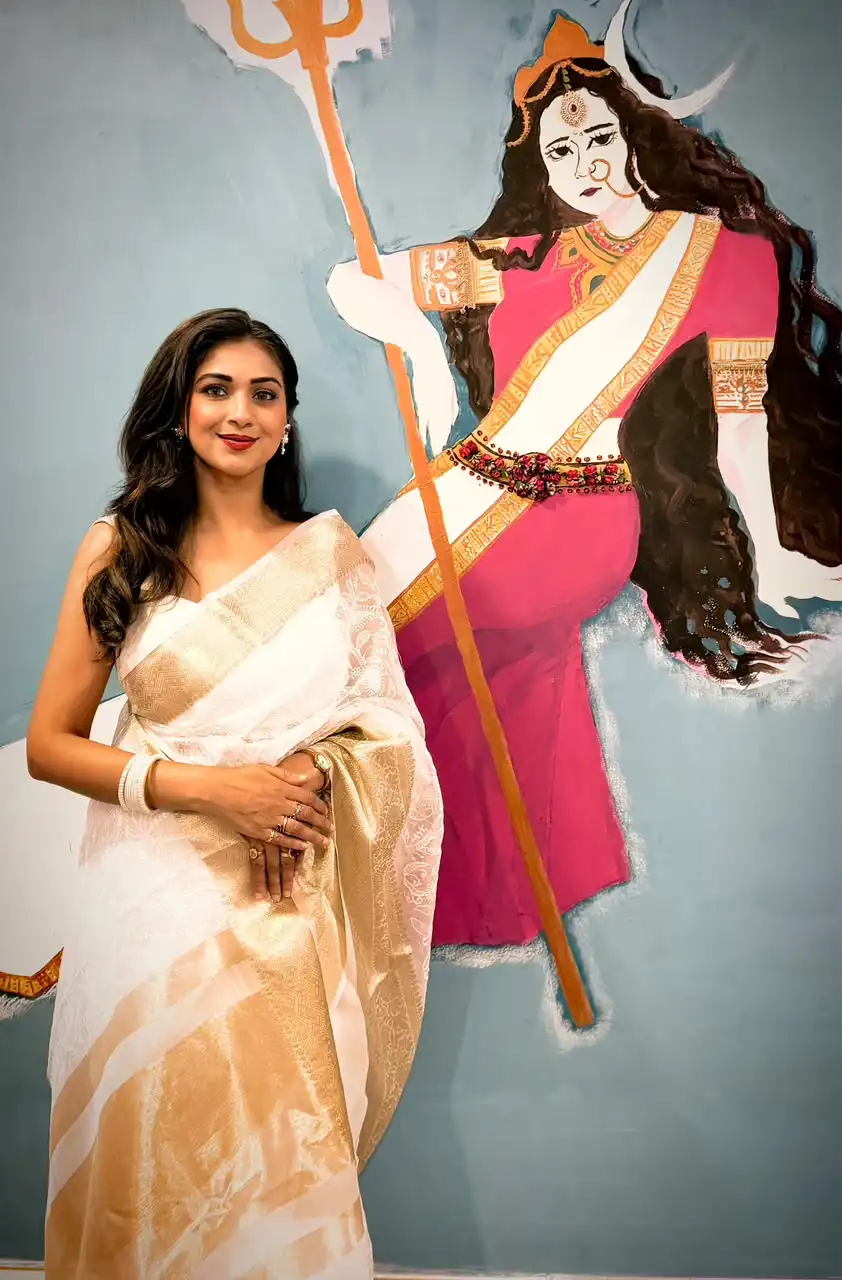
Anjali also drew a connection between the survivors’ resilience and the mythology of the Devi, whose stories centre on the power of the feminine to overcome forces seeking to destroy her. She said, “The Devi’s entire mythology is a study in the unconquerable feminine; Mahishasura, Raktabija, and every force sent to diminish her only revealed the scale of her power.”
“That is the archetype survivors embody: what was engineered to end them became the evidence of their unbreakability,” she added.
However, Anjali was careful to distinguish between honouring survivors and speaking on their behalf. She said, “I want to be precise here; I do not tell their stories, and I do not speak for them. I honour the pattern they share with the goddess: the woman who was told she was finished and kept walking.”
“The Devi doesn’t live only in temples. She lives in every woman the world tried to break,” she added. The collection also questions the fashion industry’s longstanding association of luxury with flawless skin, youth and untouched beauty. Drawing on kintsugi, the Japanese practice of repairing broken pottery with gold, Anjali argued that damage and repair can add to an object’s value rather than diminish it.
She said, “The entire luxury industry is built on a single premise: that value lives in the untouched, flawless skin, unblemished youth, the thing no life has touched. Kintsugi is the philosophical opposite: the most precious object in the room is the one that broke and was mended with gold.”
For Anjali, the gold seams in her collection were a way of making this philosophy visible and challenging the idea that imperfections must be concealed. She said, “When I gild the seams instead of hiding them, I’m making an argument the industry has avoided for a century: that repair is more beautiful than perfection, that a woman’s history written on her is not damage, it is couture.”
“Beauty was never the absence of wounds. It was always what you did with them,” she added.